Wednesday, August 26, 2009

Critique Groups


For any serious writer, a critique group is a very important part of their writing (and revising) process. Writing all alone is important at times, especially when you need to get your initial thoughts on paper or write a first draft. But, when it's time for digging deeper and revising, a good critique group is essential.

I've been with my critique group for many years. We all write for children - picture books, novels, fiction, nonfiction, poetry. There are five of us. We started out as four and later added our fifth member. When we started we were all at the beginning of our writing journey. Now, we all have at least one children's book published!

It's great to have other people who know me and my writing so well. They have seen the good, the bad, and the really bad! Plus, we are all serious about improving our writing and trying to publish.

We meet once a month at a coffee shop with ample table space. We each have a chance to read our work and receive feedback. We also save time for news and writing related updates. We have sometimes slipped into too much personal chatting, but then we re-group and use our time focused on the writing.

Our critique group meets in person, but some groups meet online. My friend, Laura, is a member of an online writing group and finds it very helpful.

So, how do you form (or find) a critique group of like-minded individuals?

- Take a children's writing class. At the end of the class, ask other class members if they would like to form a critique group. (Our original foursome met at a Loft class.)
- Look for an existing group to join. Local SCBWI chapters often post groups looking for new members.
- Join an online group through the national SCBWI website.
- Attend conferences and workshops. You're likely to meet people in the same place you are - ready to step out and join a critique group!

Who knows, maybe a few years from now you will be attending each other's book launch parties!

Friday, August 7, 2009

Two Great Events


Two great Children's Literature events are taking place on Saturday, September 12, 2009. The focus of one is meeting Minnesota children's authors and illustrators. The focus of the other is learning about writing and illustrating children's books. Both are great events that will leave you feeling inspired.

Event #1: The 10th Annual Celebration of Minnesota Children's Authors and Illustrators

This fun, free event takes place at the Anderson Center in Red Wing, Minnesota. It's held from 12:30 - 5:00 pm and is geared for children, families, and children's book enthusiasts. There will be readings by Minnesota authors and illustrators, book sales and signings, story telling, book making, face painting, ice cream and more. To learn more about this event visit http://www.andersoncenter.org/events.htm.


Event #2: MN SCBWI Fall Conference - "Chaos to Creation: The Art of Self Expression"

This event, for people interested in writing or illustrating children's books, takes place from 7:30 am - 5:00 pm at the University of Minnesota Continuing Education and Conference Center in St. Paul. The day includes a variety of workshops, keynote speakers and a luncheon. Featured speakers include Donna Jo Napoli, children's author; Priscilla Burris, illustrator; Jill Dembowski, Editor at Little Brown; and two agents, Mark McVeigh and Deborah Warren. The cost is $100 for SCBWI members and $125 for nonmembers. There are also optional manuscript and illustration reviews for an additional fee. (I will be one of the people doing manuscript reviews.) Visit http://www.minnesotascbwi.org for more information.

Both these events are wonderful opportunities to learn more about children's literature and meet some great authors and illustrators. The only problem is they are offered on the same day. So choose which one fits what you are looking for and save the date!

Saturday, August 1, 2009

Picture Book Format


Most picture books have some similarities, especially in design format. Almost all picture books are 32 pages long. Why 32 pages? It has to do with the printing process, which is done on large sheets that are then folded to create the picture book.

This does not mean the actual story is 32 pages long, though. You have to leave a couple pages at the front and back (called Front Matter and Back Matter) for copyright info, title page, etc. So, that leaves about 28 pages for the story. This is important to keep in mind when writing your picture book text.

The 28 pages breaks down further into 14 full page spreads. A full page spread is the two pages together when the book is opened flat. Even if you are not the illustrator (which I'm not), you still need to think in terms of how the overall book will look.

To help yourself visualize your story, you can make a Dummy. A Dummy is a mock-up of a picture book with your text laid out over the 32 pages. (Remember to include copyright page, title page, etc.) You can add stick figures if you like. The Dummy is for your purposes only. It is to help you see how your story fits into a picture book format. (NOTE: Do not send your Dummy to an editor! If you are not an illustrator, they do not what to see anything related to art. They know how to find good illustrators and put the book together.)

Some questions to ask yourself:
Does your story fit well into 28 pages? Will some (or all) of the pages be full page spreads? Is their too much text on some pages? Where are the best places to have page turns? Is their a compelling reason to turn the page? Does the story have an arc - meaning does it build and build to some kind of conclusion? Is their room for the illustrator to add to the story?

Ultimately, the editor and book designer decide the layout of your story. But, as a writer, it's important to think about these things. It will help ensure that your story flows well and is a good fit for the picture book format.

Friday, July 24, 2009

Great Resources


Here are some valuable resources for children's writers. If you've been writing for awhile, or just starting out, these resources are very helpful. While this list is certainly not comprehensive, it's a great place to start!

1. SCBWI - Society of Children's Book Writers & Illustrators is a national organization that organizes conferences twice a year (LA in August, NY in January). They also publish a bi-monthly bulletin and maintain a helpful website. Most states (or regions) have a local chapter of SCBWI. There are also international SCBWI chapters. You can find out about your local chapter on the main SCBWI website.

http://www.scbwi.org

2. CLN - The Children's Literature Network is based in Minnesota but serves people from all over. The sight is not just for writers, but for anyone interested in children's literature. Some of the website features are author profiles, book lists, and upcoming events.

http://www.childrensliteraturenetwork.org

3. The Purple Crayon - Children's Editor, Harold Underdown, maintains this site with tons of information about writing for children.

http://www.underdown.org

4. Verla Kay's Website - Verla Kay maintains a website with lots of information for children's writers and illustrators.

http://www.verlakay.com

5. Children's Writer Newsletter - This helpful paper newsletter comes out monthly and contains trends, interviews and articles about writing for children. Visit their website for more information and to subscribe.

http://www.childrenswriter.com

Sunday, July 19, 2009

Royalties, Advances and Flat Fees - How do they work?


How are children's writers paid for their work? There are two main ways - 1. Advance against Royalties, or 2. Flat Fee.

These two payment types usually correlate with what kind of publisher you are working with. Trade publishers (see previous blog) usually offer a contract with an Advance against Royalties. Educational publishers usually offer a Flat Fee.

What is the difference? Flat Fees are negotiated, one-time payments. You are hired to write a book for a specific fee. For example, you may be hired to write a biography for an educational publisher. Say they offer you a $1,000 fee. You would get $500 when you sign the contract and the other $500 when you hand in the completed manuscript. Then your payment is complete. You do not receive any additional funds. This is called Work-for-Hire or a contract with a Flat Fee.

Trade publishers usually offer writers a contract with an Advance against Royalties. For example, you are selling your book to a trade publisher. They offer you a $5,000 advance. You receive $2500 when you sign the contract and $2500 when you deliver the final manuscript. Then you wait. Royalties are payments based on the number of books that are sold. (Say you get $1.00 per book. So, if 300 books are sold, you receive $300.) But here is the part a lot of people don't understand. You must "earn out" your advance before you receive any royalties. So, if your advance was $5,000 you must sell 5,001 copies of your book before you get any additional money. Once you have sold the 5,000 copies, you will start receiving royalty checks in the mail.

We often hear about people getting big advances. This is good if you want/need more money up front. But, ultimately you will receive the same amount of money in the end. And if, by chance, your book does NOT sell out its advance (the 5,000 copies in our scenario), then the publisher may look less kindly on you when you want to sell them book #2.

So, bottom line - expect to negotiate a flat fee for educational publishers. And when you sell a book to a trade publisher, yes try to get a good advance, but don't worry about getting a huge amount. A smaller advance up front just means receiving royalty checks in the mail that much sooner.

Wednesday, July 15, 2009

Trade and Educational Books


What is the difference between "trade" and "educational" books for children? I have written for both markets and will explain the difference.

Basically, TRADE books for kids are the books you usually find in bookstores. The intended buyer is the general consumer. They most often are published in hardcover with a paper jacket flap cover.

The EDUCATIONAL market publishes books for children as well. These books are most often found in school and public libraries. The intended buyer is mostly librarians. (There are, of course, exceptions. But this is the basic rule.) These books are often published with a hard cover called a Library Binding (which is very durable) with no paper jacket flap.

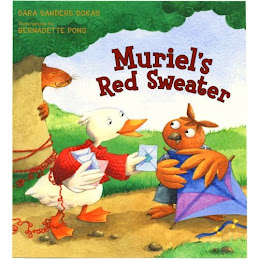
My book Muriel's Red Sweater is a trade book published by Dutton Children's Books. My book Saving Shadow is an educational book published by Picture Window Books, which is part of Capstone Press. Capstone is one of the big educational publishers. Saving Shadow fits into their existing line of "character education" books.

This photo (provided by Laura Purdie Salas) was taken at the Annual ALA show in Chicago last week. This is the Capstone/Picture Window booth at the ALA trade show. Saving Shadow is one of their featured books! ALA is attended by a lot of librarians, so the educational markets advertise big at this annual event.

Thursday, July 9, 2009

Picture Books


What exactly is a picture book?

This may seem like a silly question. "It's a book with pictures for kids, Dummy," you might be thinking. But there is more to it than that as I have learned over the years.

First off, there is a difference between an Illustrated Story and a true Picture Book. (Although, people basically call them all picture books.) But if you go to the bookstore or library, you can see the difference for yourself.

An Illustrated Story is a book for children that tells a story and has illustrations that accompany the story. Think most fairy tale books. There's the story and every page or so, a picture of some scene from the text. This is a story with illustrations.

A true Picture Book is a pairing of story and illustration. One may be able to live without the other, but the book overall relies on both. I'll give an example.

ROSIE'S WALK by Pat Hutchins is a classic and one of my favorites. (In fact, ROSIE'S WALK, in part, inspired me to write my picture book MURIEL'S RED SWEATER.)

In ROSIE'S WALK there is a story about a chicken who goes for a walk around the farm and gets back home in time for dinner. Now, if you just read the printed page, that's all you would know. But, Hutchins' illustrations add a whole other layer to the tale. We see a fox trying to catch the chicken. At every turn, the fox is thwarted (in a humorous manner) and Rosie makes it back home. Here, the book entirely depends on the marriage of story and illustration.

ROSIE'S WALK is an "extreme" example, if you will. But, the concept is the same. Whenever the pictures add to the story, instead of just capturing a moment in the text, then you have a true picture book.

Editors know this. Librarians know this. If you are both author and illustrator, pairing the two most likely comes naturally. The challenge for an author of picture books is to leave enough room for the illustrator to do his or her thing and add to the story.

And when this happens, you can feel the affect, even if you couldn't name it before. You are reading a true picture book.